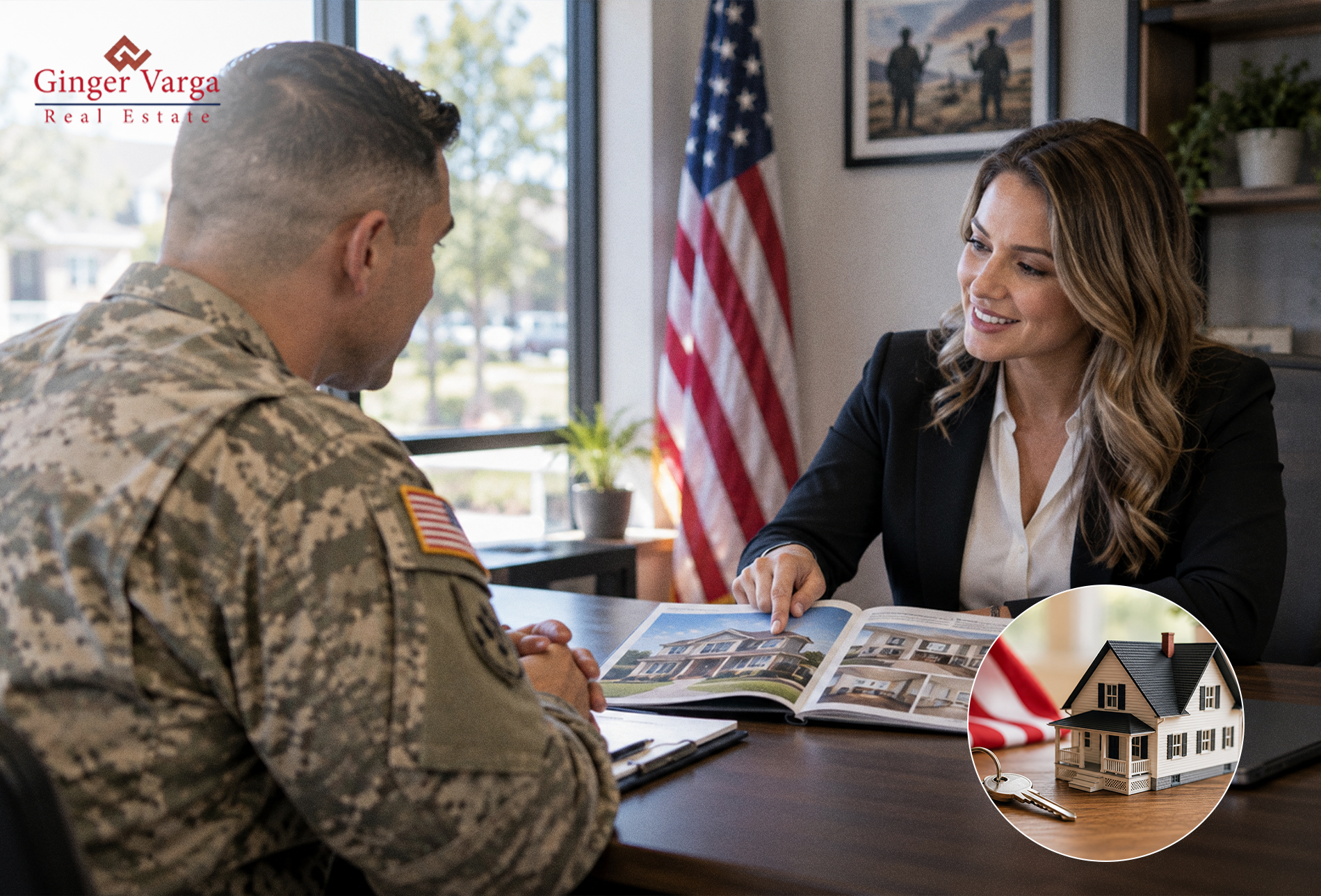
Living in Texas with a 100% disability rating and trying to sort out what your spouse and kids can claim? Between state tuition waivers, VA health coverage, and county property tax rules, it is easy to miss something valuable. Missed benefits can mean thousands of dollars in medical bills, tuition, and property taxes your family never needed to pay.
I have spent 15+ years guiding DFW military and veteran home buyers through major life transitions, coordinating with VA lenders and protecting clients’ earnest money along the way. I see the same pattern: people learn about these programs one at a time, often years late. This guide puts them in one place, explains who qualifies, and shows where your home fits in.
Quick Answer: Which Benefits Can Your Family Use?
If the veteran is rated 100% Permanent and Total (P&T) for a service-connected disability, eligible family members may qualify for education and healthcare benefits. Veterans paid at the 100% level through Total Disability Individual Unemployability (TDIU) must also have a permanent disability determination for their dependents to qualify for DEA and CHAMPVA through that status.
Property tax relief and caregiver support have different eligibility requirements. Confirm each program before you apply.
| Benefit | Who It Helps | What It Offers | Where to Apply |
|---|---|---|---|
| Hazlewood Act | Eligible spouses and children | Tuition and most mandatory fees for up to 150 credit hours at Texas public colleges | The school’s veterans services or Hazlewood office |
| Chapter 35 DEA | Eligible spouses and children | Monthly VA payments while in school or training | VA.gov using VA Form 22-5490 |
| CHAMPVA | Eligible spouses and children who do not qualify for TRICARE | Healthcare coverage, including covered prescriptions | CHAMPVA using VA Form 10-10d |
| PCAFC Caregiver Support | Eligible family caregivers | Training and counseling, with additional benefits such as a stipend for approved primary caregivers | VA caregiver team using VA Form 10-10CG |
| Texas Homestead Exemption | Qualifying veterans and eligible surviving spouses | Property tax exemption on the residence homestead | County appraisal district using Form 50-114 |
Who Qualifies as a Dependent?
Generally, eligible dependents include the veteran’s legally married spouse, biological children, legally adopted children, and stepchildren. Age limits for children are not the same across programs, which is where many families get tripped up:
- Chapter 35 DEA: Older eligibility cases generally follow age and time limits, often between ages 18 and 26, with exceptions. Children who became eligible, turned 18, or completed high school on or after August 1, 2023, have no age or time limit for using these benefits.
- CHAMPVA: Children are generally covered while unmarried and under 18, or until their 23rd birthday if enrolled in an approved school. Children who became permanently unable to support themselves because of a disability before age 18 may qualify beyond those ages.
- Hazlewood: Children using transferred Legacy hours generally must be under 26 at the start of the term, with limited exceptions. Spouses and children qualifying for their own dependent exemption follow separate eligibility rules. Applicants must meet Texas residency and other program requirements.
The VA decides disability ratings, and each program has its own paperwork, so keep the veteran’s rating decision letter handy.
What Education Benefits Can Spouses and Children Receive?
The Hazlewood Act
The Hazlewood Act waives tuition and most mandatory fees for up to 150 credit hours at Texas public colleges and universities. It does not cover books or housing.
Eligible spouses and children of qualifying P&T veterans may receive their own exemption. Veterans who qualify under Hazlewood may also be able to pass unused hours to a child through the Hazlewood Legacy Act, so ask the school’s veterans office which route fits your family.
Chapter 35 DEA
The Survivors’ and Dependents’ Educational Assistance program is a federal VA program, not a Texas one. It pays a monthly amount directly to the student for college, graduate school, trade programs, and approved apprenticeships.
The payment depends on enrollment. For education or training that started on or after August 1, 2018, VA generally provides up to 36 months of entitlement.
Spouses whose qualifying event happened on or after August 1, 2023, have no time limit for using DEA. Earlier qualifying events generally carry a 10-year or 20-year limit, depending on the circumstances. Check your dates with the VA early.
Using Hazlewood and DEA Together
Families can generally use both at the same time. Hazlewood handles tuition and eligible fees, while DEA puts a monthly payment toward books, rent, and daily expenses.
Talk to the school’s veterans office each semester so both are certified correctly.
What Healthcare and Caregiver Benefits Are Available?
CHAMPVA
CHAMPVA is a federal healthcare benefits program for eligible spouses and children of veterans rated P&T. Family members who qualify for TRICARE cannot receive CHAMPVA.
If your family has other qualifying health insurance, CHAMPVA usually acts as secondary coverage and helps with remaining eligible costs.
Caregiver Support
The Program of Comprehensive Assistance for Family Caregivers (PCAFC) supports family members who provide in-person personal care to a veteran. The veteran must meet VA criteria, including a service-connected rating of 70% or higher, enrollment in VA healthcare, and a need for at least six continuous months of personal care.
Approved caregivers may receive training and mental health counseling. Approved primary caregivers may also receive a monthly stipend, respite care, and CHAMPVA coverage if they do not qualify for another healthcare plan.
Eligible caregivers include spouses, adult children, other family members, or caregivers who live with the veteran or agree to do so.
How Do Property Tax and Housing Benefits Protect Your Family Home?
This is where your benefits meet your home search, and it can change what home you can afford.
The Texas Homestead Exemption
Under Texas Tax Code Section 11.131, a veteran receiving 100% service-connected disability compensation because of a 100% disability rating or a determination of individual unemployability may qualify for a full property tax exemption on their primary residence.
An eligible surviving spouse who has not remarried may keep the exemption if the property was their residence homestead when the veteran died and remains their homestead.
A qualifying surviving spouse who moves may receive an exemption on a new Texas homestead. However, the exemption is limited to the dollar amount received on the previous homestead in the last qualifying year, so the new property may not be fully exempt.
Remarriage ends the surviving spouse’s eligibility for this exemption. File Form 50-114 with your county appraisal district, and ask how the district prorates the exemption in your first year.
Buying a Home With a 100% Rating
Veterans receiving VA compensation for a service-connected disability are generally exempt from the VA funding fee, and surviving spouses receiving DIC are as well. Other exemption categories may also apply.
That can significantly lower your upfront costs. VA loan eligibility and funding-fee exemption status should be confirmed with your VA-approved lender, so talk to a lender early.
As a full-service buyer’s agent, I coordinate with VA lenders and help you shop for homes that fit your budget, your property tax situation, and your accessibility needs.
See my VA Loan Requirements page and my Home Accessibility Checklist for Disabled Veterans Buying in DFW. Not sure where to live? Start with Best DFW Areas for Veterans.
The Texas Veterans Land Board also offers land and home loans to qualifying veterans, and some surviving spouses may be eligible. Check current eligibility with the VLB.
What Happens if the Veteran Passes Away?
Some benefits change after a veteran’s death, and this is where surviving family members should look closely:
- DIC (Dependency and Indemnity Compensation): A monthly VA payment to eligible surviving spouses and children when the veteran’s death is connected to service or other qualifying conditions are met.
- Homestead exemption: May continue for an eligible, unremarried surviving spouse, as described above.
- VA home loans: Eligible surviving spouses may use VA loan benefits and may be exempt from the funding fee.
- Education and health benefits: DEA and CHAMPVA may continue for eligible survivors. Confirm your status with VA.
How Do You Apply?
Gather these documents first:
- The VA rating decision letter showing the veteran’s disability rating, TDIU status if applicable, and whether the disability is permanent and total.
- DD-214, needed for Hazlewood.
- Marriage certificate.
- Birth certificates or adoption records.
- Proof of Texas residency.
- Social Security numbers for each applicant.
Then follow these steps:
- Apply for DEA and CHAMPVA through VA.gov or by mail.
- Submit Hazlewood documents to each college’s veterans services office before the term starts.
- File Form 50-114 with your county appraisal district for the homestead exemption.
- Ask a free County Veterans Service Officer (CVSO) or the Texas Veterans Commission to review your applications. You can find assistance through tvc.texas.gov.
For official program details, see VA.gov and the Texas Comptroller’s property tax resources.
Ready to Talk About Homes?
If you are a veteran family in DFW thinking about buying, selling, or making your next move, I’m a full-service buyer’s agent. I’m glad to help you through this chapter and into the next one.
I’ll coordinate with your VA lender, help you find a home that fits your family’s needs, and protect your earnest money along the way. Reach out today for a free home evaluation with Ginger Varga.
Frequently Asked Questions
Can I keep CHAMPVA if I have health insurance through my employer?
Yes. CHAMPVA can work alongside employer coverage and usually pays after your primary plan. It can help cover deductibles, copays, and other remaining eligible costs. Keep your primary plan’s explanation of benefits, because CHAMPVA often needs it to process claims.
Do I need Medicare Part B to keep CHAMPVA?
If you are eligible for Medicare, CHAMPVA generally requires you to have both Part A and Part B. A Medicare Advantage plan also meets this requirement. This mainly affects beneficiaries who are 65 or older or otherwise Medicare-eligible. Check your enrollment dates with CHAMPVA, because coverage gaps can cause claim problems.
Does CHAMPVA cover routine dental care?
CHAMPVA generally does not cover routine dental care, with limited exceptions tied to covered medical treatment. VA has offered dental insurance options for some beneficiaries, but those programs change. Check VA.gov or call the CHAMPVA center for current options before scheduling major work, and consider a private dental plan.
Can a married child still receive Chapter 35 benefits?
Yes. A child’s marital status does not affect DEA eligibility. The child must still meet the applicable eligibility and enrollment requirements and use an approved school or training program. Age and time limits depend on the dates described earlier in this guide. Apply early so the VA can process the application.
Can Chapter 35 pay for apprenticeships or trade training?
Yes. DEA can cover approved vocational and technical training, on-the-job training, and apprenticeships, not just college degrees. The VA sends the monthly payment directly to the student based on the training level. The program must be approved for VA benefits, so confirm with the school or employer before enrolling.
Can dependents use Chapter 35 for online classes or graduate school?
Yes, as long as the school and program are approved for VA education benefits. DEA can be used for undergraduate degrees, graduate programs, and approved online courses. Ask the school’s VA certifying official to confirm the program is approved before you register.
Can a child receive DIC and Chapter 35 at the same time?
Generally, no. A surviving child who is 18 or older and in school usually has to choose between DIC and DEA, rather than receiving both at once. Surviving spouses are treated differently and may be able to receive both. Compare the payment amounts and talk to a VSO or CVSO before choosing.
Do stepchildren qualify for CHAMPVA?
Stepchildren can generally qualify if they meet the age, relationship, and household requirements. A stepchild who leaves the veteran’s household because of divorce or remarriage no longer qualifies. Report household or family changes to CHAMPVA promptly to avoid claim problems.
Can my child use Hazlewood and Chapter 35 at the same time?
Yes. Families commonly pair the two, with Hazlewood covering tuition and eligible fees at Texas public colleges. At the same time, DEA pays the student a monthly amount. Each program has its own paperwork and deadlines. Check in with the school’s veterans office every semester to keep both active.
Do I have to reapply for the homestead exemption every year?
In general, no. Once approved, the exemption normally continues as long as you remain eligible and use the home as your primary residence. If you move, you will need to apply for the exemption on your new home. Respond quickly if your appraisal district asks for updated paperwork.
Ginger Varga is a Realtor, not a lender, VA loan specialist, attorney, or benefits advisor. This article is general information and is not legal, tax, lending, or benefits advice. Program rules and rates change. Please confirm details with the VA, the Texas Veterans Commission, your county appraisal district, a County Veterans Service Officer, or a VA-approved lender before making decisions.